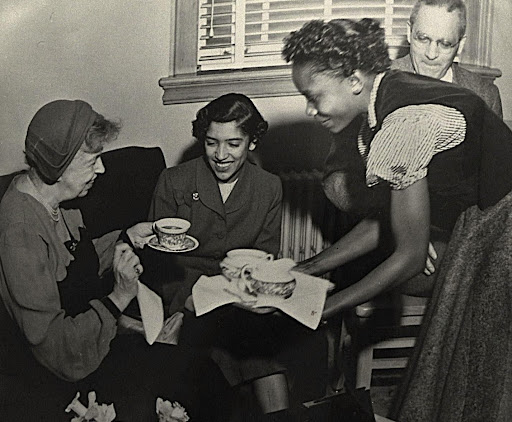
This photo of Elenor Roosevelt is undated but is evidence that she visited Lincoln Academy in the 1940s, most likely during her tour of African American schools. Roosevelt was an advocate for civil rights and early integration, even working closely with African American leaders such as Mary McLeod Bethune. One of the ways she learned more about African American schools was visiting them. Roosevelt toured schools in North Carolina in 1940, but we are unsure when this photo was taken.
Throughout the research and writing of “The Many Unheard Voices” and through countless conversations with community members, it became obvious that I would not be able to include every detail in the exhibit. It is, of course, the nature of an exhibit to not include everything due to audience attention span. That said, I recognize that much of the information that has been gathered by myself and community members deserves a place for shared information indefinitely.
(continued below…)
This digital resource serves as a way to share what couldn’t make it into the exhibit as well as information that comes to light once the exhibit has opened to the public.
I encourage you to reach out to me with your own stories, resources, photos, and more. Help me preserve the history of the African American Communities of Gaston County for the next generation and beyond.
Contact me:
If you’re curious where my research began in 2021, this is the best publicly accessible document I found: https://www.hpo.nc.gov/media/562
There are other locally published books on individual cities such as “Footprints on the Rough Side of the Mountain” by Oscar DePriest Hand, Sr. and Julia Neal Sykes.
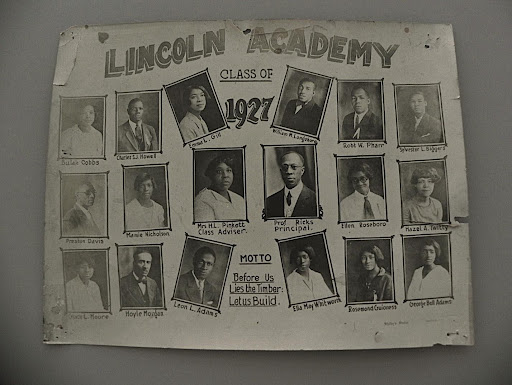
An early photographic image of the graduating class of 1927 in Lincoln Academy.
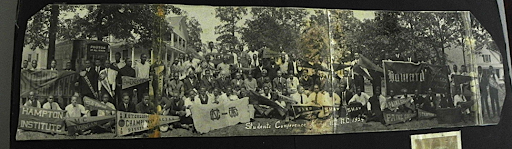
Summer Conference, 1924. The conference included prominent Historically Black Universities such as Hampton Institute, A & T College, Shaw University, Howard University, and more.
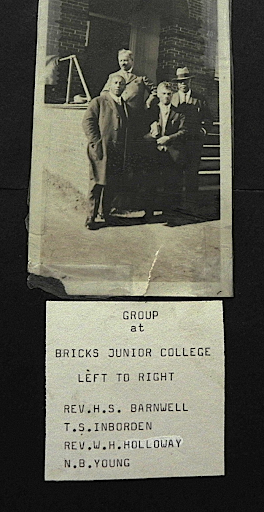
Bricks Agricultural, Industrial, and Normal School was another institution run by the American Missionary Associate (AMA). It was founded in 1895 as a liberal arts education requiring the learning of a trade as well as academics. In 1925, Bricks Junior College opened and exclusively selected students from approved high schools.
Although we do not know why the faculty of Lincoln Academy visited the school, it does indicate a partnership continuing or beginning. The schools had some similarities in addition to being operated and funded by the AMA including: expecting students to use their skills around campus and including trade education along with academia.
The school’s name was decided by community vote. The two options were Richard Allen, the founder and first Bishop of Bethel African Methodist Zion Church in Philadelphia, and John Chavis, a prominent educator and minister from North Carolina. Students sold votes for five cents and John Chavis won.
HIGHLAND HIGH
JOHN CHAVIS HIGH
Dr. G. S. Leeper and Mrs. Josephine Leeper: pre-brick and mortar in Leeper’s Chapel
Dr. C. H. Shute: 1900-1907
Dr. J. A. Rollins: 1908-1929
Mr. T. C. Tillman: 1930-1940
Mr. Thebaud Jeffers: 1941-1966
Dr. Green: 1938-later 1950s
Mr. Herman Twitty: late 1950s-1961
Mr. Joseph A. Arnold: 1961-1966
Learn more about Lora and Diane Walker by clicking the button below.
Lora Walker (Bryan) and Diane Walker (Matthewson) and Robert Pryor & Barbara Pryor were the first students to integrate white high schools in 1963. Twenty more students integrated Ashley High in 1964. More students subsequently integrated more schools across Gaston County from 1964-1965.
These are a few of the names we are aware of:
Integrated Dallas High School in 1965
Josie Brooks (Wilson)
Alfred Cloud
Patricia Derr (Surrett)
Integrated Belmont High School in 1965
Doris Stowe
Melissa Hand
Gloria Reeves
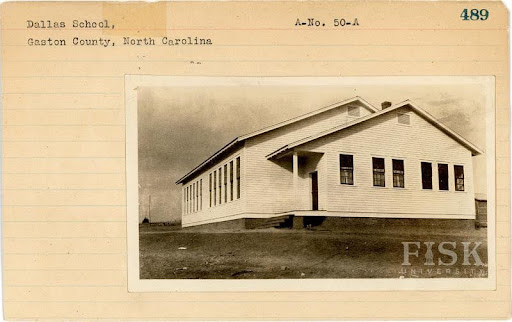
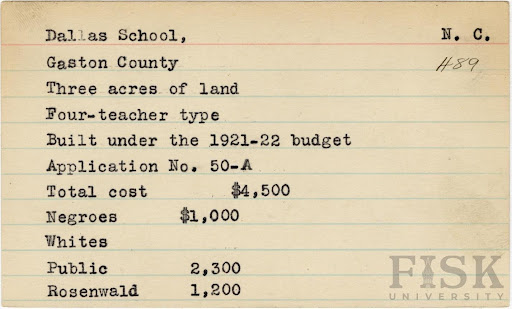
Dallas School was funded in part by Joseph and Fannie Hoffman for $15/acre in 1891. The school was later rebuilt in approximately 1921 with Rosenwald funds. It had four rooms and (although it’s no longer standing) once stood where Jaggers park in Dallas is today, off of Spargo Street.
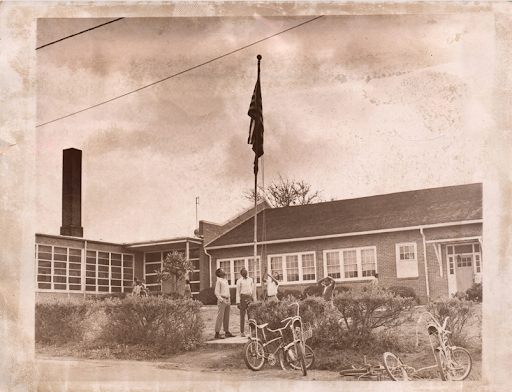
Courtesy of Deloris McNair, the photo below of Gingles Elementary School (w/ flag pole) in Dallas is the expanded version of the Rosenwald school.
Little is know about the locations of many of these schools. Please contact Alicyn if you have any information about these schools.
Want to see more images of the Gaston County Rosenwald Schools?
View the whole collection at Fisk University’s website.
Gaston County Public Libraries are integrated and later began hiring African American police officers
Nathaniel Barber elected to Gastonia City Council as the first African American councilmember. Later became the first African American city treasurer in the nation.
Human Relations Commission formed in Gastonia; five members Senator Marshall Rouch was the chairman. Role of the commission was to “do integration in a humane and unexacting way.” -Sen. Marshall Rouch, 2017.
Integrated restaurants in downtown Gastonia. Holiday In restaurant was first and commission members were the first to integrate as a group.
Integrated schools (see education for more details)
Civil Rights Act
Prince Holland:
Noted as one of the earliest African American businessmen in Gaston County prior to 1860, Prince was a freedman who owned a blacksmith shop in Gastonia.
Excelsior Credit Union:
Located in the Square of Gastonia, this credit union was an early bank for African Americans. Nathaniel Barber founded the credit union in 1947 along with other supporters such as James Biggers Sr. Barber was a prominent leader in the African American community in Gastonia.
Lightener’s Taxi Cab Service:
A taxi company in Gastonia owned by Leslie (Les) Lightener. The business was located in the Square.
Smith’s Drug Store:
A locally owned pharmacy run by Dr. Norman Smith.
Hoyles Beauty Shop
Big Daddy’s Grill:
Owned by Lindsay Roy “Peter” Woods Sr.
Wood’s Shoe Shop
Hoffman Kindergarten and Nursery School:
Owned and operated by Mrs. Myrtle Brooks Hoffman. Although she never had children of her own, Mrs. Hoffman was beloved in the community and ran a daycare for children.
Bigger’s Beauty and Grocery:
James C Biggers Sr and his wife Larnell Francis Gallimoe Biggers owned two businesses out of their home (on what is now Nat Barber Ave).
Health Department
Fire Station
Boarding House
Mill building
Third Street Presbyterian Church
Church Parsonage
Mr. & Mrs. Charles Costner, Sr.’s home
Alleyway of Homes
Mr. & Mrs. Henry Phillp’s Home
Dr. Harold Williston’s Medical Office
Apartment Building behind Medical offices
Square Pharmacy Drugstore
Dr. Clevand Floyd’s Dentistry
Excelsior Credit Union
Lawyers Earl Ramseur/ Ralph Gingles, Jr.’s Offices Upstairs
Dr. George Watts’ Medical Office
Flo’s Diner/ Love-Workman’s Cafe
Dairy Bar/ Apartments Upstairs
Taxi Yard (Lightner Cab, Glenn Cab, Russell Cab, Dial Cab, Burris Cab)
Woods Shoe Shine/ Shoe Repair Shop
Chambers Laundry Mat
Brown’s Barber Shop/ Barber/Hudson/ Degree Beauty Shop
Massey’s Filling Station
Ted’s North Hi Shell
Long’s Service Station
Tan Yard Tenements
Three Dueces Club
Pool Room
Grocery Store
American Legion
Boy’s Club/ Long Street
Tracy Long Auto Repair
Ray Smith’s Mercantile
John Groves Home
Flora Means Home
City of Gastonia Waterworks Department
Costner Funeral Home (North York Street- early years, North Marietta Street- later years, before moving to West Franklin Boulevard- present location)
Credit Union first facility
Palace Theater
Boarding House in an alley way
Groves Cafe
Elder’s Boarding House
The Elder’s Homeplace
The Byrd’s Homeplace
Glenn and Adams Barber Shop
Geneva Davis Beauty Shop/ Ronald Davis Beauty Shop/ Margaret Cranke’s Record shop
Geter’s Produce and Grocery
Epworth United Methodist Church
Mr. & Mrs. Till’s home and store
Club Artlessa
Elk’s Lodge
Kennedy/ Turner Home
Ed Odom’s Shoeshine Parlor/ Boarding House/ Repair Business
Sanders/Martin’s Funeral Home
Highland High School, later Highland Elementary School
Larnell Biggers (mother of James C. Biggers, Jr.) is remembered for raising money and advocating for infant incubators and the training of staff on using them after she gave birth to a premature baby who died because the staff couldn’t use a loaned incubator. The incubator was loaned from a white doctor (name unknown) who was friends with James C. Biggers Sr., Larnell’s husband.
The first baby to utilize the incubators after being born premature was Ina Orr (Biggers).
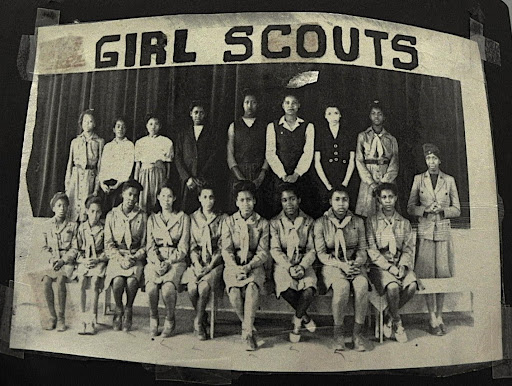
This is a photograph of a Girl Scout troop at Lincoln Academy. Joining the Girl Scouts was a popular activity in Gaston County’s African American community. Just about every high school had members.
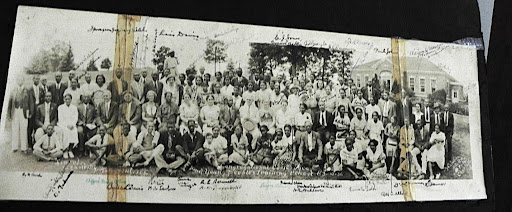
Lincoln Academy also hosted a Congregational Conference at their campus during summer months. This photo from 1936 includes the names of many participants of the First Congregational Church Conference.
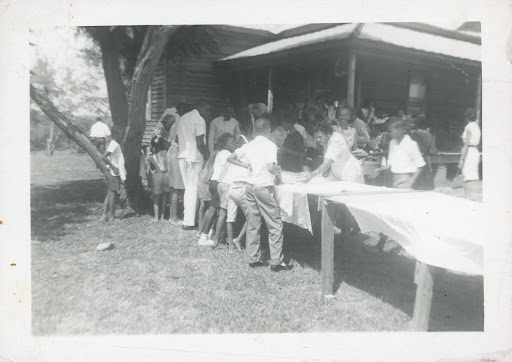
Photograph of a family potluck courtesy of Antonio Griggs. This photograph shows every-day celebrations and gatherings with food, family, and fun.
Juan Logan:
He is an international American artist known for abstract paintings, sculptures, public art, and more. Born in Nashville, Tennessee, Juan Logan attended Reid High School in Belmont, North Carolina. He still resides and creates art in Belmont today. Learn more at his website. https://www.juanlogan.com/
Roy Lindsay Woods:
A native to Gastonia, Roy Lindsay Woods still creates art and lives in Gastonia. He is best know for his paintings, collages, and more.